Showing posts with label language. Show all posts

Friday, 17 February 2012

Air cats

Yesterday I was in a bar with Fred and his girlfriend. As per usual the conversation meandered in all kinds of directions, until we hit one of my all time favourites: animals. Fred’s girlfriend mentioned that she found it strange that in Dutch we have a product called ‘WC-eend’ (Toilet Duck – I’ve complained about it before), which should really be called ‘WC-swan’ (Toilet Swan) if you think about it. Indeed, the bottle looks much more like a swan than a duck.


Which brought me to the following thought. There are actually loads of animals that have funny names in the sense that they don’t look like the aninal they’re named after. Especially sea animals, it seems.

Oh sure, there’s a sea spider or a sea horse which do look like spiders or horses, but there are others that just don’t make any sense to me.

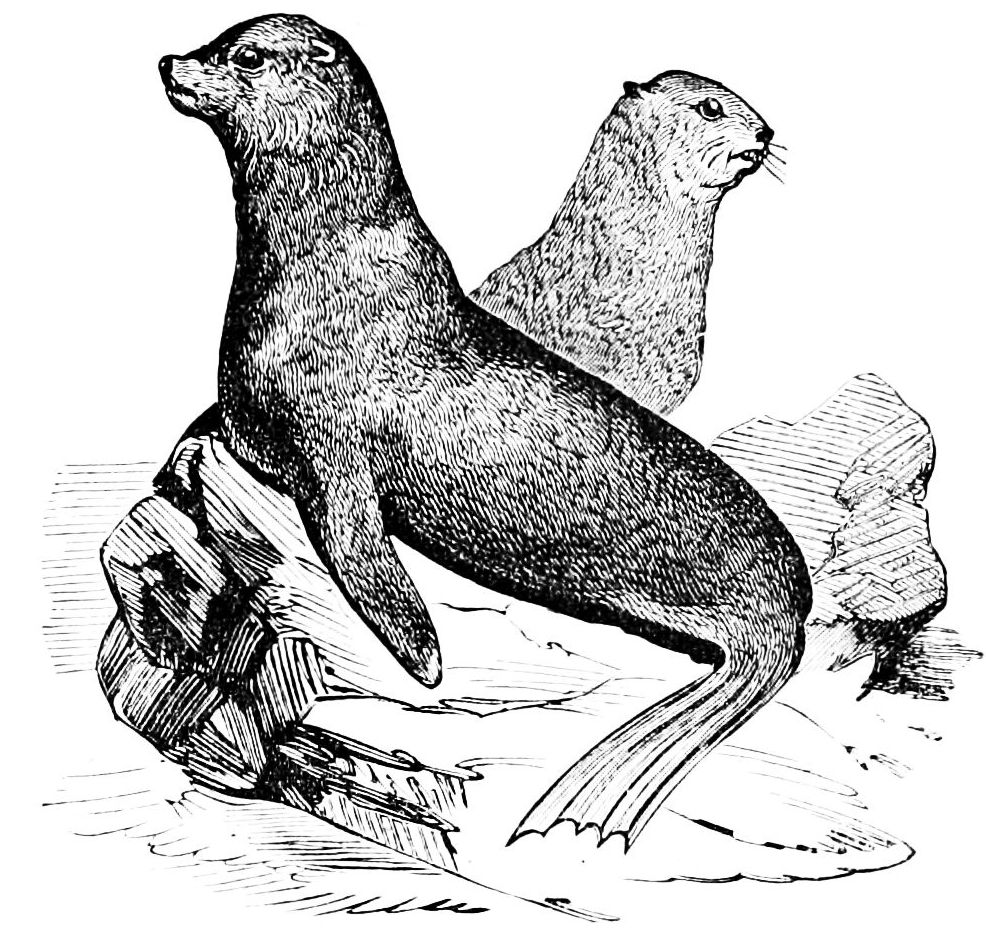
Like the different kinds of seal-like creatures – you know, those slippery bastards with big snouts and whiskers that shout ‘uh uh uh’ all day and used to stink up your local Aquaworld. They have the most funny names like sea lion, sea cow and even sea bear or sea elephant!

But I don’t get it. What kind of biologist was observing this animal:


and thought to himself: “That kind of looks like a bear! That’s it, I’m gonna call it a sea bear!"? Didn’t it cross his mind that it would be pretty confusing to have a sea bear if we already have a polar bear, which is basically a bear that (partly) lives in the sea?


I mean, it’s almost as if we were out of inspiration when it came to giving names to the sea animals. Instead of inventing something new we just said. Okay that’s a sea eal, that’s a sea spider, that’s a sea turtle, that’s a sea snail. There’s no end to it!

Imagine we’d done that to birds? Look, son, there’s an air cat:

   
Lazy biologists.


Thursday, 9 February 2012

Conversationally challenged

This morning I was quietly doing some work at home, when the doorbell suddenly rang. As I live in an apartment building I have that typical phone in my own apartment that allows you to ask who’s there. Unfortunately the phone is broken. So I have two choices: either let the unidentified visitor enter (I can still use the button to open the door remotely) or go down and see who it is.

In this particular instance I wasn’t going to let just anyone in. Call me paranoid, but then again we’ve had somewhat strange visitors before here. So I went down to open the door.

Standing outside was a young guy – perhaps a couple of years younger than I am. He had blackish hair that was combed back with a lot of gel and wore a curious outfit. I guess he’s one of those people who decide, even though it’s freezing, that they don’t need to adapt their outfit to the weather. As if they think: “I don’t care if it’s -5°. A shirt and a summer’s jacket will do just fine”. Strange lot, and the more I keep my eyes open for them on the street the last few days, the more I seem to come across them.

Anyway, there he was. So I open the door and give him a friendly but inquiring look. Eyebrows slightly raised, head cocked to the side and looking slighly upwards. As if to say: ‘Yes?’. At this point the guy doesn’t say anything but just steps into my rather small hallway. Now call me paranoid, but to me that’s odd. Someone rings my doorbell, I open the door for them and they just step inside, without so much as a word. And even though I didn't initiate the conversation, I'm not supposed to, I think. He is.

So I said to him: “Can I help you?”, trying to sound casual and accommodating, but probably not able to erase all notes of suspicion in my voice.

He looked at me sharply and said “I’m here to see my brother. You must know him”. That’s what he said, literally and with the same emphases. Now I found this odd for a bunch of reasons, the most important one being what I subsequently asked him. “So why didn’t you ring his doorbell then?”

At this point the guy was obviously annoyed, as I surmised from his curt answer: “Because his doorbell is broken.” I replied: “Ah, okay, it’s just…” and I left my sentence to trail off. Obviously, I meant to say “Ah, okay, it’s just that I found it a little strange that you ring my doorbell and you don’t tell me why you're there when I open the door”, but I didn’t say it out loud. I mean, that’s the way people handle social situations like that. You leave something unsaid but imply it, rather than being rude by saying it explicitly. It’s called ellipsis. We do it quite often. For instance, why when you accidentally touch someone’s hand in a crowded train you say ‘Sorry’ and not ‘Sorry I touched your hand’. That’s just making things more awkward.

However, this guy wasn’t too socially adept, as I was heavily suspecting by now. And my suspicions were confirmed by his answer to my “Ah, okay, it’s just…”. He said: “It’s just… what?

So I tried a variety of the same technique of ellipsis. I said: “Well... it’s just that I wanted to know”, again leaving out what I wanted to know. And then I made a conversational mistake, I followed the remark by “It’s not as if I don’t believe you, you know”.

At which point he just sighed. And that was that.

I think this easily qualifies as one of the strangest conversations I’ve ever had. I mean, I can't for the life of me figure out what the sigh exactly meant. Surely he didn’t realize that my “It’s not as if I don’t believe you” actually implied the opposite (i.e. “Yes, I am suspicious of you”)? He'd react more angry if he realized that. Or did he realize that he had been wrong all along by not telling me why he was there in the first place? But that could hardly have been the case, since he was probably lying to me. Indeed, I could clearly hear him knock on his brother’s door and shout his name in the hallway. His brother wasn’t there though. Instead they met a few moments later back on the street. (Oh yes, I confess. I was spying).

But the strangest thing is that I now feel bad about the whole exchange.

Indeed, who is strange here? The guy who rings someone’s doorbell and doesn’t explain why he’s there, or the guy who has spent the whole day analyzing what was said (and not said) in those 30 seconds?

Right.


Tuesday, 31 January 2012

Dictionary for aliens (3)

It's been a while since the previous entries, see here for an example, but we are finally back with another episode of the dictionary for aliens...

Baseball: This is a popular ball game played by earthlings, especially in the United States, Japan and Cuba. It is played with a bat and a baseball. The latter is modelled on fossilized remnants of so-called Flurkimons, a type of rodent which once inhabited the planet Flurkistan in the Mice Galaxies, next to that gigantic hypermarket where they used to sell vintage sponge umbrellas. 

Flurkimons (Leporidae Ceruminis) became famous in the year 27915AR, when two Flurkinese scientists (Wofflidop and Zondistrop) solved a famous, long-standing problem in Textile Engineering for Creatures with Ears: "Does there exist a way to cross earplugs with ear warmers?". The answer turned out to be the Flurkimon itself: this fluffy animal was found to feed on earwax, and it therefore became common practice amongst creatures with ears to balance two of these hairy rodents on top of their head: the fur itself protected the ears against extreme temperatures, whereas the tongue of the Flurkimon (instinctively inserted into the ear, to feed on earwax) protected the bearer against excessive noises. In exchange for some gentle slurping noises. Or gnawing noises - depending on the consistency of the creature's earwax...

Legend has it that the first visitors to planet Earth had Flurkimons on board, but they soon got bored by the deafening silence in the spacecraft (which was built according to advanced noise-reduction techniques developed a few decades earlier for vacuum cleaners) and so they wanted to know what would happen if they put the tongue of a Flurkimon inside its own ear. This turned out to be a complete disaster: as biologists have later confirmed, the saliva of a flurkimon triggers the production of its own earwax, causing this creature to get trapped in an almost sadistic consequence of what the laws of evolution predicted. Its tongue and ear continued to grow, as the production of saliva and earwax ran out of control, whereas all other body parts shriveled away and in the end disappeared completely. During the penultimate phase of its existence (the Red Giant phase), the Flurkimon expanded as a throbbing ball of earwax-slurping, heavily pulsating tissue, after which it imploded into a little white spherically-shaped object of incredible density (the White Dwarf phase). This object was left behind on the Earth, not in the least because of its smell.

We believe that the inventor of the baseball must have picked up the fossilized remnants of this particular unfortunate Flurkimon, but decided to throw it away immediately. Because of its smell, obviously. This also explains the strange rules according to which this game is played: one earthling throws the ball away, as fast as possible (the smell!), another earthling then hits the ball as far away as possible with a bat (I am telling you, the smell!) and a third earthling then tries to catch this ball, only to throw it back as quickly as possible (yups, the smell). 


Wofflidop A.,  Zondistrop, A., On a remarkable connection between Flurkinese rodents and Textile Engineering, Journal of Edible Excrement 15, pp. 12-9038 (27915AR).

Gorilkouftimon, G. Is it possible to build a perpetuum mobile with Flurkinese earwax and saliva, Journal of Unlikely Answers to Difficult Problems 9 No. 78, pp. 12-13 (27911AR). 

Tuesday, 24 January 2012

Length (sometimes) matters

I love it when I see my English vocabulary expanding. This, of course, in sharp contrast to my abdominal circumference or the occasional pimple on the inside of my ear. Today, I bumped into a word I hadn't met before: somnambulism, which is basically a synonym for sleepwalking. Once again, it made me realize how lucky I am not to suffer from fear of long words.

Yes, fear of long words. Chances are you didn't know this, but this is an actual phobia. Some of the known symptoms of this form of fear are rapid breathing, sweating, overall feeling of dread, shortness of breath, irregular heartbeat and nausea. Ironically enough, the official medical term for this phobia is (and I swear, this is real, I am not kidding you) hippopotomonstrosesquipedaliophobia (or 'sesquipedalophobia' for "short"). Say what?

Now, imagine your name is Christopher-William and that you were born in a lovely village in Wales called Llanfairpwllgwyngyllgogerychwyrndrobwllllantysiliogogogoch. By the time you shared your personal details with the specialist investigating your condition, you might be vomiting the shit out of yourself in a corner of his office. And I'm afraid you don't even want to hear what you're suffering from: by the time the conclusion of the investigation is communicated, you could actually be dying...

What intrigues me, is the following question: would there be a maximal amount of letters people suffering from sesquipedalophobia can handle without getting sick? This might seem like an irrelevant question to you, but think about this: one year you're having your birthday party (although it's not very likely that the actual Dutch word for it, verjaardagsfeestje, was mentioned on the invitation), safely enjoying your pancakes (pannekoeken, which was a valid way to spell this word before 1995). Next year however - after the Dutch spelling reform - pancakes make you sick because you have to add an extra letter! The other option is that sesquipedalophobia symptoms arise through a gradual process, starting with a mild headache for words containing between 5 and 8 letters, shortness of breath between 9 and 16 and an irregular heartbeat for words containing at least 17 letters. Which is pretty cruel, don't you think? The more points you score in Scrabble, the sicker you get...

Also: how do you organize your life? I mean, what kind of job can you do when you have a phobia for long word? Nowadays, with all the neologisms they are inventing to mask the true nature of a job (head of the logistics department in a waste service company may in reality stand for 'driving the waste truck'), reading job ads may already be quite a hazardous situation. Obviously, anything related to chemistry is excluded, especially when your childhood dream was to investigate titin (the largest known peptide): the chemical name for this protein is Methionylthreonylthreonylglutaminylarginyl...isoleucine, a word (well, people are debating this - as it is a technical term, it is not in the dictionary) containing 189,819 letters! Yes, Wikipedia is your friend; unless of course 9 letters or more make you sick... The only option I see is to become a crossword puzzle maker, so that the maximal amount of letters you are confronted with on a daily basis is bounded. But that is pretty uninteresting, don't you think? Sorry, I mean 'dull'.

Next time you want to use a long word to impress people, I suggest you think twice and consider using an easier synonym. Because length sometimes matters...

[We would like to point out that this post is not meant to make fun of people suffering from fear of long words: we don't like floccinaucinihilipilification...]


Friday, 16 December 2011

LinkedIn: Shit That Siri Says

There's nothing technology can't do anymore, my grandma would say. Actually, she'd use some juicy West Flemish turn of phrase, but that would be the gist of it.

I was reminded of this when recently I heard about Siri on the new iPhone. Siri is an intelligent software assistant which functions as a personal assistant. Apple describes it as follows:

Siri on iPhone 4S lets you use your voice to send messages, schedule meetings, place phone calls, and more. Ask Siri to do things just by talking the way you talk. Siri understands what you say, knows what you mean, and even talks back. Say something like “Tell my wife I’m running late.” “Remind me to call the vet.” “Any good burger joints around here?” Siri does what you say, finds the information you need, then answers you. It’s like you’re having a conversation with your iPhone.
Sounds like science-fiction, doesn't it? But it really seems to work. (If you want to see how, you can find a little movie clip here.)

However, as with all artificial intelligence and voice recognition programs, there are always situations that cannot be anticipated and which will result in the program going nuts. I remember that Lernout&Hauspie's dictation software was fine as long as you stuck to words a toddler would know, but once you started dictating things like antidisestablishmentarianism you'd end up with rather strange stuff on the screen.

And so it's no different with Siri. It's fine when you ask it to find you the nearest bakery, remind you to go pick up your dry cleaning next week, but when you ask some more hardhitting questions, you can get some strange answers. Especially since the developers have given Siri what they call a 'sassy personality'.

Now some guys have dedicated a whole site to strange responses Siri gives (and I guess to asking strange questions too!) and they called it Shit That Siri Says. Here are some of the best for you to enjoy:


Funny, innit? You'll find many more on http://shitthatsirisays.tumblr.com/!

Tuesday, 29 November 2011

Stop, Look and Listen

My friend N was once told me: ‘People should really pay more attention to the lyrics of songs’ and she was right. I guess for most, the rhythm and melody are enough, but who knows the words? And I’m not talking about a few lines from the chorus. I’m talking about the meaning of a whole song.

A good example of this phenomenon is the painfully inappropriate songs some people select for the opening dance at their wedding. Every Breath You Take by The Police, for instance, sounds nice enough, but it’s actually about a stalker. Yes, that’s what I'll be watching you means! However, it’s not that obvious, so maybe there’s an excuse for this one.

The next one is worse, though. My Heart Will Go On, the song that was made famous by the movie Titanic, is another favourite at weddings. Still, people should realise if they saw the movie (and let’s face it, everyone did) that Céline Dion is singing about a dead boyfriend! She says as much in the one but last chorus: Love was when I loved you / One true time I hold you / In my life we'll always go on.

But I will Always Love You by Dolly Parton / Whitney Houston has to be the worst. Of course, people tend to remember only the line that gave the song its title and I guess that’s a pretty romantic statement. But what about the first chorus: Bittersweet memories / that is all I'm taking with me. / So, goodbye. Please, don't cry. / We both know I'm not what you, you need. That’s not too romantic now, is it? Indeed, the song is about a breakup.

Anyway, after this conversation with N, it became something of an obsession for me to really listen to lyrics. Sometimes it's fun. (Elbow, for instance, has some of the best out there). But I must say, it has its downsides too. Some songs are pretty awful when you stop and consider them as lyrical poetry, and worse, some lyrics don’t even make any sense.

This morning as I was munching my cornflakes, for instance, I heard these two:

Should I stay or should I go?
If I go there will be trouble
And if I stay it will be double.
So you’ve got to let me know:
Should I stay or should I go?
Hmm. Going means trouble. Okay, gotcha. And staying means double trouble. Right. So, there’s not much of a decision here, is there? I’ll take trouble over double trouble any day.

You’re so vain,
You probably think this song is about you.
You’re so vain,
I guess you think this song is about you,
Don’t you, don’t you?
Hmm. Sing all you want, cookie, but the song is about him. Think about it. It doesn’t make any sense to sing a whole song to someone and then claim it’s not about that person!

Anyway, yet another way to ruin a perfectly enjoyable thing by thinking about it. That’s Fred and Fred for you folks!

Friday, 25 November 2011

Holy shit

Yesterday I was not a happy camper. And although the reason for my foul mood wasn’t primarily that (surprise surprise) I was once again going through a commute from hell, it sure didn’t help either. By the time I was on my fourth train that morning and still hadn’t reached my destination to start the working day, I was pretty depressed. Now the train in question was packed with people trying to do the same as I was, but there was also a fairly large number of American students on it, all girls. And of course they did the classic American girl thing: they talked. Quite loudly, I might add.

But rather than the sheer volume of their quacking, it was their language that angered me. It really was my very own United States of Whatever on that train (click here if you don’t know what I’m talking about). In essence, this boils down to endless conversations consisting of nothing but ‘Yeah, whatever…’, ‘And then she was all like…’, ‘But I ain’t sayin’ nuthin’, knowwhamean?’ and similar capital offenses against the Queen’s Tongue. And of course that had me going for the rest of the day…

Indeed, it suddenly dawned on me that throughout any given day I’m at least several times annoyed by bad language. I already mentioned people using the noun ‘paranoia’ for the adjective ‘paranoid’ the day before yesterday. Now some of you might say, ‘Well, is it really that bad that the language is evolving into using ‘paranoia’ both as a noun and an adjective? A philologist like you should realise that language changes constantly and that there’s not really any objective reason to label something good or bad if it’s used by a community of speakers’. Well touché, I guess someone woke up with a linguistic mind this morning! But you see, I’m not really trying to decide what’s right and what’s wrong here. What I’m saying is that when we use poor language (in the literal sense of a language being less rich than before the change), we might end up using poor thinking.

For instance, most English speakers don’t know the difference between disinterested and uninterested. Now uninterested means you are not interested in something, as in ‘She gave him an uninterested look’, while disinterested means you take no interest in something, as in ‘To be a good referee you have to be disinterested’. Most people would use both to express the same, and many have already forgotten disinterested or consider it a posh alternative. But think about it: when we confuse both words or ultimately end up with only one, doesn’t that also mean that we’re losing a way to distinguish between two very different things? And doesn’t it fit wonderfully well with modern society that we are forgetting the notion of being disinterested (and objective) and favouring the notion of being uninterested (and - often - selfish)?

Anyway, to illustrate how bad language can ultimately turn into very bad thinking, or perhaps vice versa (I’m not too sure in this case), consider this picture of a sign posted in the bathroom of my working place. It’s been annoying me for months on end now, mainly because I cannot for the life of me decide what it actually means. I suppose the person who drafted it wasn’t too careful with the way he expressed himself and there you have the logical consequence: utter nonsense.


(for those who don’t speak Dutch: ‘Please put the toilet brush back clean and dry in its holder. Thank you kindly in advance!’)

But Holy Mackerel, what does that mean ‘put the toilet brush back clean and dry’? Clean and dry? You do know I’m using this brush to clean off my shit from inside a wet toilet, don’t you? That’s what it’s for! How on earth am I going to keep it from getting dirty and wet? Or, alternatively, do you expect me to get it clean and dry after I have used it? But what do you want me to do? I can’t very well rinse it out in the sink and then use the blow dryer to dry it, can I?

For God’s sake, people. Let’s try to express ourselves articulately, shall we?

Thank you in advance.

Wednesday, 26 October 2011

Thought-terminating clichés

If your job involves attending the odd meeting once in a while, you’ll be quite familiar with my topic of today. Lately it seems conversations in meetings are filled with nothing but clichés.

For instance. You’ll suggest a valuable addition to a proposal and the chair might say: Thank you. This is, of course, a work in progress. And you’ll be quiet again. Mind you, they did not say, Thank you. You are right. We will do that too. No, they managed to shut you up, without any guarantee that your suggestion will be implemented in the proposal.

This is an example of the use of what psychologists call a thought-terminating cliché - or Totschlagargument as our German friends put it - a commonly used phrase, used to quell disagreement. Though the phrase in itself may be valid in certain contexts, its application as a means of dismissing dissent or justifying fallacious logic is what makes it thought-terminating. The notion was suggested by Robert Lifton, a professor of psychology, in his book Thought Reform and the Psychology of Totalism: A Study of "Brainwashing" in China from the 50s.

If you browse the net a bit, or just pay attention in dialogue all around you, you’ll be shocked to discover how many such thought-terminating clichés are in vogue. On this website, I found some very good ones, such as:

That’s a no-brainer.
You don’t always get what you want.
What goes around comes around.
You win some, you lose some.
Everyone is entitled to their own opinion.
It’s just common sense.
Easy come, easy go.
That’s life.
It is what it is.
Whatever.
Meh.

Only just now, I’m shocked to discover that I probably use the last one several times a day!

But the best one is nowhere to be found. I didn’t come up with it myself (yes, I’m a bit lazy today), it’s courtesy of one Adam Carolla, an American comedian I really have to blog about one day soon.

His favourite thought-terminating cliché is simply…

Yeah, but still…

Just try it in your next meeting. When someone states an opinion you disagree with, just reply with an uninterested Yeah, but still…. It will always work.

Come to think of it, I can only hope no one who will be attending my lecture on Friday reads this blog! Just imagine the discussion afterwards:

Fred: I do think the functionalist approach works better than the philological one.
random dude: Yeah, but still.
Fred: Of course, this is a work in progress.
random dude: Yeah, but still.
Fred: ...and everyone is entitled to their own opinion.
random dude: Yeah, but still.
Fred: Meh
random dude: Yeah, but still.
Fred: Meh


(the sound of the audience leaving the room)

Monday, 24 October 2011

Quotes from the book (8)

I’m glad to see that Fred finally added a Dutch book to our currently reading section, because I was beginning to think I was the only one still reading Dutch books! True, I’m fonder of English fiction too, but I definitely enjoy reading in my mother tongue as well. Especially if it’s a book like Lijmen / Het Been, written by arguably Flanders’ most ill known writer, Willem Elsschot (1882-1960).

In fact, Lijmen (1924) and Het Been (1938) are two novellas that together make one novel (hence the strange / in the title) about the entrepreneur Boorman who employs Frans Laarmans (a name you might know as the protagonist of Elsschot’s most famous book Kaas) to help him sell copies of a magazine that doesn’t really exist.

One of the things I enjoyed immensely in this book that dates back to the interbellum, is it’s highly archaic language. It coats the work in a grandiloquent style, which then contrasts acutely with the dry cynicism of the story. Or what else do you make of a sentence like this one?

Zij hadden een hoed op en een boordje aan, maar ze stonken naar drank en voerden een taaltje om van te ijzen. Toen ik zei wat die kerel zich vermeten had mij toe te voegen, toen lachten zij en beweerden dat zoiets in een werkmansmond niets te betekenen had.
English translation, anyone? (ijzen = ‘to shiver’, zich vermeten = ‘to dare’, toevoegen = ‘to say’)

Or, for a more substantial specimen:

Het was een smokerige loods met glazen dak. In een hoek stonden een paar smeden, die een leven maakten als een laatste oordeel; in ’t midden lag een voorraad hoek- en plaatijzer op de vloer, terwijl zes of zeven bankwerkers, draaiers en monteurs zich tegen de muren een plaats hadden uitgekozen. Toen wij plechtig aantraden en Boorman aanstalten maakte om de centrale stapel te beklimmen, verstomde plotseling het geraas en tien gezichten keerden zich naar ons toe.
Wij werkten onszelf behoedzaam over het ijzer heen en stonden nu voor een houten schot, met een deur en twee kleine vensters, waardoor een schrijftafel met kopieerpers zichtbaar was, en diverse andere voorwerpen die op kantoren in gebruik zijn.
Terwijl mijn patroon even naar binnen loerde, kwam een oudachtig man achter zijn werkbank uit, stapte op Boorman toe, nam zijn pet af en zei gemoedelijk, “dat ze dadelijk zou komen”.
Het was een vervallen mannetje, enigszins gekromd en met vermoeide ogen. Zijn ouderdom kon ik niet schatten, want zijn gezicht zag te zwart.
“Vriend,” zei Boorman, “ik zou meester Lauwereyssen willen spreken. Geef hem dit kaartje en zorg hij eens dat hij dadelijk hier komt.” En hij stopte de man een naamkaartje en een royale fooi in de hand.
De monteur stak beide dingen aarzelend in zijn zak en keek door zijn Bril tegen Boorman op, als had hij gaarne nog iets gezegd. De beschroomdheid snoerde hem echter de mond, want hij draaide zijn pet om, vertrok zijn gezicht en bewoog de lippen, doch bracht generlei geluid uit.
“Piet!” riep van op een afstand een basstem, “zou ik er geen U-ijzertje tegenaan klinken, liever dan die slappe bulb-hoek?”
“Ik kom direct,” antwoordde de man met de bril.
“Jawel,” zei Boorman, “maar roep eerst meester Lauwereyssen, alsjeblieft.”
“Mijnheer,” zei het mannetje verontschuldigend, “ik ben Lauwereyssen. Gaat u maar in ’t kantoor en wacht even. Mijn zuster zal zo meteen beneden komen.”
“Aangename kennismaking,” was alles wat Boorman kon uitbrengen.

I highly recommend Lijmen / Het Been. It’s one of those books you’ll remember. While reading it, three people on the train spontaneously made comments to me about how much they enjoyed it, even though it was compulsory school reading in their time.

Can you blame them?

Ik ben mij gaan afvragen of al onze daden en gedachten niet achter ons aan wandelen, of zij niet een deel van ons zijn, ons gevolg, onze hovelingen, waarvan de stoet aangroeit naargelang wij zelf slinken, die wij evenmin negeren kunnen als onze vleselijke kinderen en die misschien fluisterend nablijven, lang nadat wij zelf tot stilte zijn gebracht…


Monday, 17 October 2011

There's no word for it

Last month, Fred elected to write about the English language, claiming that it is so rich and well-endowed that there are beautiful words for everything. He even provided us with a few new words to spice up dinner parties, remember?

Today, I would like to point out that the English language is actually not that rich. Every once in a while, I find myself in a situation where I end up making ridiculously long sentences and awkward comparisons, sometimes even drawing pictures, in order to convey a message, an experience or an emotion which turns out to be quite familiar. Which leads me to the question: why is there no word for it?


For example, anyone who has ever bitten his nails has probably experienced the pain induced by that little stubborn piece of nail shown on the picture above. Correct me if I'm wrong, but this particular (disproportionally) uncomfortable feeling seems to be more common than being afraid to read out loud - isn't it? And yet, there is a word for the latter (alourophobia), and not for the little buggers attached to your finger? All we're asking for, is a noun...

I would also like to advocate the introduction of a word to describe that special feeling you experience when you wipe your butt, after a more than average number two, and you notice that the piece of toilet paper is still perfectly white. Somewhere between being proud of yourself and feeling slightly worried ("Did I forget how to do it?"), between feeling the urge to share this with the world (Fred has updated his status using his iPhone) and not trusting your own senses anymore (has anyone ever stopped wiping after exactly one white sheet of toilet paper?). I once read a word for the end product ('the mystery poo'), but as far as I know there is no word for the emotional state in which you return from the toilet. And all we're asking for, is an adjective...

- Are you okay Fred? You look like you're having a [insert noun].
- Oh no, don't worry, I just feel a bit [insert adjective].

Friday, 30 September 2011

The Ig Nobel Prizes

You might have read about them in the paper today, but obviously there is only one source that you can trust on a topic like this: your faithful Fred and Fred. If ever something was right up our alley, it’s the Ig Nobel Prizes.

In case you missed it: the Ig Nobel Prizes (a pun on ignoble and Nobel) are awarded each year in October for ten unusual or trivial achievements in scientific research. The stated aim of the prizes is to ‘first make people laugh, and then make them think’.

Yesterday the 21st award ceremony took place at Harvard University, and a Leuven professor was on the receiving end. Indeed, Luk Warlop, together with a number of colleagues, received the prize for demonstrating that people make better decisions about some kinds of things – but worse decisions about other kinds of things – when they have a strong urge to urinate.

Funny, innit? And it gets even better if you remember that the Ig Nobel Prizes are almost always presented (by genuine Nobel laureates, by the way!) to actual researchers who have been labouring for years on extraordinarily difficult, but seemingly trivial or absurd topics. Just imagine what some academics apply themselves to. Here’s a small sample of the prizes over the years:

  • Literature (1995): David B. Busch and James R. Starling, for their research report, ‘Rectal Foreign Bodies: Case Reports and a Comprehensive Review of the World’s Literature’. The citations include reports of, among other items: seven light bulbs; a knife sharpener; two flashlights; a wire spring; a snuff box; an oil can with potato stopper; eleven different forms of fruits, vegetables and other foodstuffs; a jeweller’s saw; a frozen pig's tail; a tin cup; a beer glass; and one patient's remarkable ensemble collection consisting of spectacles, a suitcase key, a tobacco pouch and a magazine.
  • Chemistry (1998): Jacques Benveniste, for his homeopathic discovery that not only does water have memory, but that the information can be transmitted over telephone lines and the Internet.
  • Physics (2000): Andre Geim and Michael Berry, for using magnets to levitate a frog. Geim later shared the 2010 Nobel Prize in physics for his research on graphene, the first time anyone has been awarded both the Ig Nobel and (real) Nobel Prizes.
  • Physics (2001): David Schmidt, for his partial explanation of the shower-curtain effect: a shower curtain tends to billow inwards while a shower is being taken.
  • Biology (2003): C.W. Moeliker, for documenting the first scientifically recorded case of homosexual necrophilia in the mallard duck.
  • Economics (2005): Gauri Nanda, for inventing Clocky, an alarm clock that runs away and hides, repeatedly, thus ensuring that people get out of bed, and thus theoretically adding many productive hours to the workday.
  • Mathematics (2006): Nic Svenson and Piers Barnes, for calculating the number of photographs that must be taken to (almost) ensure that nobody in a group photo will have their eyes closed.
  • Medicine (2010): Simon Rietveld, for discovering that symptoms of asthma can be treated with a roller coaster ride.

Now say for yourself: surely it’s any academics dream to receive an Ig Nobel Prize one day? Therefore we from Fred and Fred are already hard at work for next year’s edition. Just imagine the possibilities…

  • Cosmology (2012): Fred and Fred, for proving the possibility that parallel universes exist in which even numbers cannot be divided by 2.
  • Linguistics (2012): Fred and Fred, for their study ‘Fly, Feel and Fall’, a list of 1,000 words which become very funny when pronounced with a Japanese accent (which turns every f into an h and every l into an r).
  • Marketing (2012): Fred and Fred, for definitively disproving that cleaning products which feature animals (ducks, frogs, bears, etcetera) clean better than those which do not.
  • Philosophy (2012): Fred and Fred, for (the title of) their paper ‘Does Existentialism Really Exist?’.
  • Sports Science (2012): Fred and Fred, for discovering the constant h, representing the relation between the size of the ball and the size of the hole (basketball, snooker, golf, …).
  • Medicine (2012): Fred and Fred, for their decennia-long research ‘Is it really impossible to lick your own elbow?’.
  • Communication (2012): Fred and Fred, for talking for a whole night about the infinite monkey theorem, which states that a monkey hitting keys at random on a typewriter keyboard for an infinite amount of time will almost surely type the complete works of William Shakespeare.


Fingers crossed!


Thursday, 29 September 2011

PhD peculiarities

Last Sunday Fred came over to my place and we had a healthy discussion about stuff only Freds can have discussions about. The matter at hand was Latin alliteration and assonance and its relation to independent and conditional probability. But rest assured, I won’t bother you with the details…

However, at some point in the conversation a strange fait divers came up, which I am sad to say I can’t recall anymore. What I do remember is that I could proudly refer Fred to the passage in my PhD thesis where said fait divers was mentioned. Which reminded me how much strange stuff there actually is in my PhD! For a thesis about one year (1598) of a humanist's correspondence, there sure is a lot of unexpected information in there. Only recently, for instance, I told my friend E. about the fact the Romans collected taxes on pee (the urinae vectigal) as it could be used in the leather industry…

Indeed, this is only one titbit of the gazillion strange little pieces of information contained in the 911 pages of PhD I worked on from 2003 to 2009 (yes, I had no life then, thank you). As I was able to do so by your hard-earned tax-euros, I thought it only fair to give you a small sample of such PhD peculiarities.

My PhD will inform you about:

  1. The precise name of the Roman gladiator who fought wearing a helmet without any openings for the eyes and who therefore competed completely blind (Andabata).
  2. The way the 1598 peace talks between the Spanish and the French at Vervins almost didn’t start because of a row about the exact formation in which the different diplomats would be seated during the negotiations.
  3. The different sources and opinions about the life span of the Phoenix, the mythical bird that rises from its own ashes (500 or 1000 years depending on whether you believe the Greek or the Roman tradition).
  4. The title of a book in which you can check what the weather was like in the Low Countries (Belgium and The Netherlands) from 1000 AD to the year 2000 (J. Buisman, Duizend jaar weer, wind en water in de Lage Landen, Franeker, 2000).
  5. The fact that the Greeks seem to have been more afraid of the sea than the Romans. (If you don't believe me, see De Saint-Denis, Le Rôle de la Mer dans la Poésie Latine, pp. 300-302).
  6. The differential diagnosis (yes you know this term from House MD) for an oedema (which can be caused by anything from small bruises to serious infections, heart failure, nefrotic syndrome (kidney failure) or non-Hodgkin’s lymphoma (cancer of the lymphatic system).
  7. The fact that Spa water was already sold in bottles in 1598.
  8. The mathematical problem of the quadratura circuli, the challenge of constructing a square with the same area as a given circle by using only a finite number of steps with compass and straightedge (it took people until 1882 to realise that it’s actually impossible).
  9. Who brought the tulip to Europe, who popularized its cultivation, and when the Dutch tulpomania reached its zenith (Augerius Busbecquius, Carolus Clusius and the 1630s)
  10. The phrase: “Can I have another gin-tonic?” in Modern Greek (και άλλο τζιν τόνικ)
  11. A lengthy discussion of the correct surname of Thomas Rhediger (Rhedigerus, Redingerus, Rehdiger, Rudinger, Rudiger, Rüdiger, Rediger, Redinger or Rehdiger?)
  12. The fact that horridula virtus (‘the hard virtue’) is a strange expression because the adjective horridulus is usually employed in Latin in connection with nipples.
  13. That Pliny the Elder knows a plant that will give you difficulties peeing, which is strangely called chamaeleon (see Plin., hist. nat., 22, 18, 21)
  14. Some considerations on why the Persian imperial messengers called Peichi (Peykān-i Hāsṣṣa) could have carried a small axe and a flask of perfume with them (perhaps the perfume was a gift, emergency payment or just good manners when they had travelled for miles on end to deliver the message?)
  15. That the 41st abbot of the Benedictine monastery of Liessies near Avesnes was a naughty man because he drank and partied at the monastery.

Phew! And still the papers are saying that university education in Belgium needs to be of ‘more general’ interest.
Of course, this wouldn’t be a blog on Fred and Fred if there weren’t a little twist to it. Of the aforementioned fifteen peculiarities, one is not really mentioned in my PhD. Can you spot which one ? It’s number -1000+8371-7359 (just a calculation as a spoiler alert…). But mind you that’s only because I struck it out at the last minute. It’s still the God honest truth!

PS: if ever you would feel the need to learn more about which plants cause difficulties peeing or about Latin adjectives usually associated with boobies, you can read the full version of my PhD through this link. Enjoy!

Wednesday, 21 September 2011

LinkedIn: Share a secret

A few days ago I had something I wanted to say. Badly. Fortunately for me, I have a forum to do so, which is, of course, the little corner of the Internet you are currently looking at. So as usual I started typing away during my commute and before long I had finished the piece. I devised a title for it (it was to be called All the world’s a stage), it tied in with previous subjects (for instance, the idea of hyperreality) and it was about something most people could relate to. So from an objective point of view there was nothing wrong with the blog entry. Still, for some reason it felt wrong to post it. And after long deliberation I decided to do something I had never done before: I decided to self-censor and not publish the piece. At the time I didn’t quite know why, but today I suddenly figured it out.

It came to me when I was thinking about the very first sentence of this piece (yes, please have a second look at it). While typing it, I hesitated for a moment between the verbs say or tell. Which made me realise that I should not have written 'I had something I wanted to say', but 'There was something I wanted to tell someone'. Indeed, there’s a big difference.

The problem was that I didn’t have the nerve to tell the person in question. I still don’t. So I was faced with an impasse: I couldn’t say it on our blog and I couldn’t tell it in person. Which basically comes down to having a secret. Usually people define a secret as something you shouldn’t tell anyone. But think about it, isn’t the worst secret the kind you can’t tell anyone?

Luckily there is a solution. During one of my nocturnal wanderings along virtual shores, I came across this site: http://coloresque.net/secrets/. It’s actually a virtual art project called Share a secret, which consists of a very simple premise. The site offers you a text box, through which you can share whatever secret you like. You won’t get a response and it’s completely anonymous. The only condition, the site states, is that you tell something that’s true.

Try it. (And be truthful.) I did it, and there’s something quite remarkable about it.

What, you may ask? I won’t tell you. As I learned from this experience, some things are best left, indeed, a secret.

Monday, 19 September 2011

Quotes from the book (6)

I guess I have several strange habits. Like enjoying beans in tomato sauce straight from the tin at any hour of the day, or the need to pace around and talk to myself whenever I need to think really hard about something. Another one which continues to surprise people (and hopefully is not a sign of my culinary cruelty or imminent insanity), is this: every year I re-read a book.

The fact that I already know what’s going to happen, doesn’t bother me one bit. On the contrary, I find there’s a kind of quiet solace in the safety of such an enterprise. Besides, I happen to particularly like books without a real story. I really do. Preferably bulky novels that speak about … well, nothing much at all, actually. Like Murakami’s The Wind-Up Bird Chronicle, which takes 607 pages to tell how an unemployed man discovers a strange well in his garden. I’m sure that to many people this might seem an exquisite form of torture, but not to me. Truth be told: I’ve always liked words better than stories. Perhaps that’s why I’ve never really managed to write one myself?

This year I re-read a book that can be considered the epitome of a book without a story: John Banville’s Eclipse. Two hundred and twenty four pages about a man going back to live in the house he grew up in and reflecting on his life. Nothing of real importance happens in the meanwhile, but to quote Robert Macfarlane in The Guardian: ‘With prose like this, who needs a plot?’.

Indeed, Eclipse is an exercise in language and style. Which doesn’t mean if feels artificial. Banville writes a thick, rich and silky smooth English. Sweet to the tongue and velvety on the palate. Like dark chocolate sauce. But beware, like chocolate sauce Banville can be a bit bitter too, for his pages abound in an almost unspeakable melancholy. Indeed, Eclipse has a tragic beauty that will crush your soul. But then again, I think we need to get our soul crushed once in a while. Don’t you think?

It is late, the light is going. My mind aches from so much futile remembering. What is it I hope to retrieve? What is it I am trying to avoid? I see what was my life adrift behind me, going smaller and smaller with distance, like a city on an ice floe caught in a current, its twinkling lights, its palaces and spires and slums, all miraculously intact, all hopelessly beyond reach. Was it I who took an axe to the ice? What can I do now but stand on this crumbling promontory and watch the past as it dwindles? When I look ahead, I see nothing except empty morning, and no day, only dusk thickening into night, and, far off, something that is not to be made out, something vague, patient, biding. Is that the future, trying to speak to me here, among these shadows of the past? I do not want to hear what it might have to say.

Monday, 12 September 2011

There’s a word for it

If you know anything, anything at all, about me, you’ll know that I like words. Which is quite the understatement. Oh how I veritably venerate verbiage, lavishly love language and wantonly worship words! I’ll tell you a secret: whenever I meet a new word I particularly like, I repeat it over and over to myself, sometimes even giggling rather foolishly. Oh how I want to eat the Latin ruminare (what cows do with their food)! How I rage and rumble and ravage when I taste the Flemish rulokte (‘wild’) on my tongue! Or how I get misty-eyed when I read the French larmoyant (‘to cry for’). To me, many words feel like what they mean. Conversely, some words feel like the opposite of what they mean, like linoleum, which should have been the name of a pleasant Mediterranean seaport, as one of my word heroes L.P. Wilkinson once observed, not the rather unpleasant floor covering. And so every word tells a story to me. Which has been a blessing, because it's probably the sole reason I'm not living in a cardboard box today!

But why am I telling you the presumably bleeding obvious? Well, some time ago a few of you told me you were happy that I introduced you to the word meteo sensitive (i.e. your temper follows the weather). To be exact, my friend W. mentioned it to me first a while ago, so I shouldn’t claim credit. However, this reminded me of a few other words that you might not know but find funny or deem interesting. Fred himself used one in his very first blog: retrotort, and so I thought I’d teach you some more just in case you have to spice up a boring dinner party (Caution: Fred and Fred will not be held accountable should anyone use these in a frantic attempt to keep the conversation going on a date. The results could be unforeseeably disastrous.)

(1) Backronym

We all know an acronym, right? It’s a word that’s actually not a word but a compilation of the first letters of a phrase, like radar which was coined in the 1940s from ra(dio) d(etection) a(nd) r(anging). Well, a backronym is the opposite of that. A word which people think is an acronym, or make into one, but really isn’t. A good example is SOS. I always thought SOS was short for Save Our Souls. Turns out that’s not how it originated. The army just wanted a simple Morse code for a distress signal, so they chose …---…, which spells S O S by chance, not because it’s short for something. Alternatively, a backronym can also be used to (somewhat corny) comic effect. Like when you’re fed up with your old Ford-car and tell a friend Ford actually stands for Fix Or Repair Daily.

(2) Complisult

Another good one is a complisult, which is a compliment and an insult mixed together, like in the sentence “That’s such a nice dress. It does wonders for your figure” or “You’re smarter than I thought!”. At first it looks like a compliment, but in fact when you think about it, it’s more like an insult. Sometimes you can leave the insult part elliptically, like in the famous “Do you think she’s pretty? - She has a wonderful personality.”.

If you’d like to know more unusual but fun words that fit into this category of There’s a word for it, you can check out the homonymous (there’s another one!) book for sale on Amazon! And if you’re still not convinced why you should like words, have a look at what Stephen Fry has to say about it, typecast in the craftiest of kinetic typographies:


Word.

Tuesday, 6 September 2011

JLo

Okay, I’ll be honest: I feel like being a bit dramatic today. So I thought I’d do some complaining for you. Nerd-like complaining involving difficult words, sure, but still, complaining. You know, just in case your day hadn’t been annoying already, I thought I’d happily share two of my own frustrations, both concerning matters of the media.

(1) I have to admit I’m a sucker for bad TV. I liked Big Brother until it grew old (halfway the second season), I liked Idol and I still like Survivor (called Expeditie Robinson in Belgium), so yesterday I thought I’d give another show a try. This one has been around for quite a while, but I never watched it from beginning to end, and since yesterday was the first episode, now was my chance. The show is called Farmers Looking for a Wife, and recently they added or a Man to that, because they’ve had female farmers on. The show’s premise is actually not that bad: it’s a dating show for farmers, who understandably haven’t got much time for a social life. Which leads to toe-cringingly awkward situations of course… All fun and games so far, until somewhere in the latter part of the show. After a short speed date with the various candidates the farmers had to pick three and send the rest home. After each selection the camera then showed the losers’ walk of shame. Five or six women or men - understandbly not the best in either the looks or the brains department - walking back to their cars, heavily upset for being rejected and all of a sudden even more aware of the camera in their faces. Now I’m not so naive to suppose the producers of this show have the farmers’ or the suitors’ best interests at heart. I know it’s TV and I know TV doesn’t show people’s real stories, it uses people to show scripted stories. But this was TV kicking people when they’re down, and even I could taste the dirt of its boot. Is it really true that most people will only feel pity for the contenders in this scene and not hostility towards the makers of the show? Because that’s the only way a shot like that can ever work. That’s cynical.

(2) I’ve been hearing this radio ad for some Brussels university lately and it’s driving me up the walls. If I remember well, it starts off with some sounds from nature and a documentaryesque voice whispering: “We find ourselves in the habitat of the studentus Brusellus…” The rest of the ad I don’t remember because I get so f*ing worked up about studentus Brusellus! It’s pig-Latin, or, for the Flemish among you, Jommeke-Latin. Just take any word and put -us at the end and it’ll be Latin! But for crying out loud, in an ad for a school? Really? You couldn’t be bothered to ask someone with an inkling of Latin to come up with studens Bruxellensis, which isn’t quite correct, but acceptable and still recognizable? Of course, the ad is supposed to be funny, but clearly the joke is in the grotesque circularity of the scene, a scientist describes a scientist (the student) in a scientific way. A bit like when Charlie Chaplin participated in a Charlie Chaplin-lookalike contest. So for the scene to work the scientific element is crucial and has to be believable. It doesn’t have to be correct, but believable. Like when you know the starship in Star Wars doesn’t actually work, but it looks like it works. The thing is, for many people, studentus Brusellus is not believable. In comparison, none of the Latin in the Harry Potter spells is correct, but for those who do notice, they also notice it is consistent (in its errors), which makes it a kind of code. And codes appeal to our sense for secrets and mystery, which not only preserves the dramatic illusion in a movie about a wizard, but even strengthens it! So, all things considered, why be sloppy, use bad Latin and risk losing the attention of anyone who knows a little of Rome’s language? It kills the dramatic illusion of the joke… unless, of course, correct vocabulary itself is a joke to the Brussels university in question. Which I suppose it is.

I told you I was going to be a bit of a drama queen today. Primarily a Latin drama queen, it turned out. Yes, go back to the title, enjoy your Aha-Erlebnis and be amazed by my powers. Always the drama... Sigh.


Wednesday, 24 August 2011

Dictionary for aliens (2)

Mosquito repellent: a substance applied to human skin, in order to attract mosquito's and encourage them to bite at particular places on the body - depending on one's preference. Earthlings do this by covering themselves with this substance almost completely, but deliberately avoiding certain spots which are then meant to be bitten. This can be a finger, the tip of an elbow or a spot on the ankle.

Mosquito net: (Australian slang: mozzie net) a device which looks like a fine, see-through mesh construction which can be hung over the bed (from the ceiling or a frame) or built into a tent, and works more or less like a fish trap for small, biting insects spreading tropical diseases. Unless the mosquito net is broken, there will always be at least one tiny hole through which insects will enter the trap but cannot leave. Most mosquito nets are impregnated with some kind of repellent, in order to make sure that this hole can easily be found. For optimal results, humans sleep under these nets having applied mosquito repellent to their body: this increases the chances of being bitten at the desired position.

Tuesday, 16 August 2011

Dictionary for aliens

Toothbrush (-es): an instrument which looks like a head of tightly clustered bristles (mostly synthetic fibers, although animal bristles are sometimes used as well) attached to a handle. Earthlings usually employ this object under the pretext of oral hygiene, but recent studies have confirmed that the act of brushing the teeth is essentially a ritual which may precede any activity that requires them to use both hands. The idea is to moisten the brush, to apply some toothpaste to it and - most importantly - to wedge the brush into the cavity formed by one relaxed cheek and the (gently) clenched teeth at the same side. Once this is done, earthlings can do whatever comes to their mind: sending text messages, putting food into the fridge, writing things down, updating Facebook statuses, going to the toilet, tying shoes, making sandwiches or - although slightly more advanced - answering phone calls.

Theoretical physicists claim that toothbrushes may cause tiny local distortions in the space-time continuum when used properly: local customs on Earth dictate that teeth should be brushed for 3 minutes (an old-fashioned unit of time, roughly equal to the time it takes to boil an egg), but almost all scientists who have actually seen an Earthling brushing his teeth have noticed that it takes less time on the observer's clock. The precise explanation for this phenomenon is not yet fully understood.

Friday, 17 June 2011

Does my ass look big in this (car)?

This week, Fred and I are both going for a visit to what I fondly call The Far West, the West of Flanders that is. Since per chance we both planned to leave by Sunday noon and to return on Monday evening, and since I was going to drive over there anyway, we’ll be carpooling, obviously. But today Fred sent me an e-mail in which he - and I quote - ‘demanded’ to give me gas money for the ride…

Now this reminded me of something which I have been meaning to bring up. When people say (or write) things, they can basically do two things. One is: make a statement. This constative language, like ‘It’s raining outside’. It’s a statement, it’s information. The other thing is: do something. This is performative language, like when you told your mom ‘I promise I won’t hit my brother again’. It’s not giving information, it’s doing something, namely making a promise. We call that a speech act, doing something through language. By saying ‘I promise’, you do what you say, you promise. To put it succinctly: in constative language we say what we say, in performative language we do what we say.

But if you look closely at language, there’s performance and speech acts everywhere. The same sentence ‘It’s raining outside’ which was purely constative when mentioned above, can also be performative. For instance, when you use this sentence as an answer to someone asking you how you are doing. In the dialogue ‘Fred: ‘How are you, Fred?’ - Fred: ‘It’s raining outside’ Fred is not really giving information in his answer. Instead he is performing a bluesy feeling. He is suggesting he’s feeling a bit down. This too, is a speech act.

Of course, I didn’t think of this myself. If I did, I wouldn’t be wondering once in a while what I’m going to do with my life - or better yet, how I’m going to afford my life - when I run out of a job in 2013. Instead it was the British philosopher J.L. Austin came up with it in his book How to Do Things with Words?

Now it’s fun and really interesting to consider the performative dimension of what we say or what people say to us, as it might clarify some puzzling situations. For instance, if you visit someone and they ask you if you’d like a cup of coffee, you might respond ‘Please don’t bother!’. In this case, you are saying no, but your speech act is rather different. Your speech act is actually saying you might like some coffee, but feel socially awkward that the person in question should have to go and brew a pot on your behalf. Most people, however, are intuitively aware of this performance in ‘Please don’t bother!’ and will insist ‘I was just going to make a pot anyway!’. The performance in their insistence tells you to get over your awkward feeling. Net result: a nice cup of coffee.

But make no mistake, the performative dimension of language can also be a big problem between people, even between best friends or married couples. For instance, when breaking up, people will say ‘It’s not you, it’s me’ - which most of the time isn’t true, but the speech act is: ‘I know I’m hurting you. Please try not to take it out on yourself’. However, most of the times, we do not hear this speech act. It gets lost in the communicational distrust that tends to arise when people hit a rough spot in their relationship.

And the queen of all problems in speech act theory can be summed up in the famous, but dreaded seven words ‘Does my ass look big in this?’ to which there is no answer no matter which speech act you take into consideration. Answering ‘No’ (considering a speech act of uncertainty) only gets you ‘You’re only saying that because you know that’s what I want to hear’. Answering ‘Yes’, even as a joke, or in pure performative desperation, is no option either. Obviously.

So when Fred sent me the e-mail with the demand to pay for the gas, I first felt a little bit annoyed. We’re good friends, I thought, it shouldn’t matter whether I drive or not. I’m not asking to pay when we’re having drinks at his place. Does that make me a bad person? And then it hit me: Fred’s insistence to pay for gas money, is actually a performance of his social awkwardness over the fact that I have a car and he should benefit from it. Of course, I’m fine with him coming along on the boring ride, and he probably knows it, but still he cannot help himself from saying ‘I insist I pay for gas’. But in a way, this a good thing because it means that his speech act is really his way to say thank you for the other times he rode with me.

So I’ll try to respond to your mail with your speech act in mind, Fred: ‘Sure, you can give me gas money. And no problem for all the other times. You’re welcome to ride with me any day!’.